
Protel DXP is the first board-level design system to integrate all design tools into a single platform, allowing electronic designers to work in their own preferred style from initial module planning through to the generation of production data.
Protel DXP runs on an optimized design browser platform and incorporates all the features of today’s advanced circuit design software, enabling it to handle a wide range of complex PCB design processes.
By integrating technologies such as design input simulation, PCB layout editing, automatic topology routing, signal integrity analysis, and design output, Protel DXP provides a comprehensive design solution.
Principles of PCB Circuit Design
- Selecting a PCB
- PCB Dimensions
- Component Placement on the PCB
- PCB Routing
- PCB Grounding
- PCB Electromagnetic Interference (EMI) Mitigation
- PCB Pads
- Large-Area Fills on the PCB
- PCB Jumpers
- High-Frequency Routing on the PCB
Selection of PCB Boards
PCB boards are generally made from copper-clad laminates. When selecting board types, factors such as electrical performance, reliability, manufacturing process requirements, and cost-effectiveness must be taken into account.
Commonly used copper-clad laminates include copper-clad phenolic paper laminates, copper-clad epoxy paper laminates, copper-clad epoxy glass cloth laminates, copper-clad epoxy-phenolic glass cloth laminates, copper-clad PTFE glass cloth laminates, and epoxy glass cloth for multilayer printed circuit boards.
Laminates made from different materials have distinct characteristics.
Epoxy resin exhibits excellent adhesion to copper foil, resulting in high bond strength and a high operating temperature; it can withstand tin soldering at 260°C without bubbling.
Epoxy-impregnated glass cloth laminates are less susceptible to moisture.
Copper-clad PTFE glass cloth laminates are the best choice for UHF circuit boards.
For electronic equipment requiring flame retardancy, flame-retardant PCBs are necessary;
These PCBs are made from laminates impregnated with flame-retardant resin.
PCB Dimensions
The thickness of a PCB should be determined based on the PCB’s function, the weight of the mounted components, the specifications of the PCB connectors, the PCB’s overall dimensions, and the mechanical loads it will bear.
The primary consideration is ensuring sufficient rigidity and strength.
Common PCB thicknesses include: 0.5 mm, 1.0 mm, 1.5 mm, and 2.0 mm.
From the perspectives of cost, copper trace length, and noise immunity, smaller PCB dimensions are generally preferable.
However, if the PCB is too small, heat dissipation may be inadequate, and adjacent traces may cause interference.
The manufacturing cost of a PCB is directly related to its area; the larger the area, the higher the cost.
When designing a PCB intended for use within an enclosure, the PCB dimensions are also constrained by the size of the enclosure itself.
It is essential to determine the enclosure size before finalizing the PCB dimensions; otherwise, the PCB dimensions cannot be determined.
Generally, the routing area specified in the no-route layer defines the PCB’s dimensions.
The optimal shape for a PCB is rectangular, with an aspect ratio of 3:2 or 4:3.
When the PCB dimensions exceed 200 × 150 mm, mechanical strength must be taken into account.
In summary, PCB dimensions should be determined by weighing the pros and cons.
PCB Component Placement
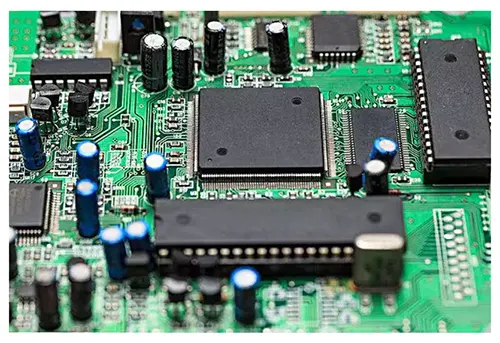
Although Protel DXP offers automatic placement, in practice, component placement on PCBs is almost always done manually during circuit design.
PCB component placement generally follows the rules below:
Placement of Special Components
The placement of special components should take the following factors into account:
1. High-frequency Components
Interconnections between high-frequency components should be as short as possible to minimize distributed parameters and mutual electromagnetic interference.
Components susceptible to interference should not be placed too close to one another.
The distance between input and output components should be as large as possible.
2. Components with High Potential Differences
The distance between components with high potential differences and their interconnections should be increased to prevent component damage in the event of an accidental short circuit.
To prevent creepage, the distance between copper traces carrying a 2000V potential difference should generally be greater than 2 mm;
For higher potential differences, the distance should be increased further.
High-voltage devices should be placed in locations that are difficult to reach by hand during debugging.
3. Heavy Components
Such components should be secured with brackets. Large, heavy components that generate significant heat should not be mounted directly on the PCB.
4. Heat-Generating and Thermosensitive Components
Ensure that heat-generating components are kept away from thermosensitive components.
5. Adjustable Components
The layout of adjustable components—such as potentiometers, variable inductors, variable capacitors, and microswitches—should take into account the structural requirements of the entire unit.
If adjustments are made internally, these components should be placed on the PCB in locations that are easily accessible for adjustment.
If adjustments are made externally, their positions should correspond to the locations of the adjustment knobs on the chassis panel.
6. PCB Mounting Holes and Bracket Mounting Holes
Mounting holes for the PCB and brackets should be reserved, as routing cannot be performed in or near these holes.
Layout Design Based on Circuit Functionality
Unless otherwise specified, components should be placed as closely as possible to their arrangement in the schematic diagram, with signals entering from the left and exiting from the right, or entering from the top and exiting from the bottom.
Arrange the positions of each functional circuit unit according to the circuit flow to ensure smoother signal transmission and maintain consistent signal direction.
Center the layout around each functional circuit, arranging components evenly, neatly, and compactly.
The principle is to minimize and shorten the leads and connections between components.
The digital circuit section should be laid out separately from the analog circuit section.
Distance of Components from the PCB Edge
All components should be placed within 3 mm of the PCB edge, or at least a distance equal to the board thickness.
This is necessary to provide space for guide rails during assembly line insertion and wave soldering in mass production, and to prevent damage to the PCB edge caused by contour machining, which could lead to copper trace breaks and result in scrap.
If the PCB is too densely populated and exceeding the 3mm limit is unavoidable, a 3mm auxiliary border can be added to the PCB edge.
A V-shaped notch should be cut into this auxiliary border so that it can be snapped off by hand during production.
Component Placement Order
First, place components that require precise structural alignment, such as power sockets, indicator lights, switches, and connectors.
Next, place special components, such as heating elements, transformers, and integrated circuits.
Finally, place small components, such as resistors, capacitors, and diodes.
PCB Routing
The rules for PCB routing are as follows:
1. Trace Length
Copper traces should be kept as short as possible, especially in high-frequency circuits.
Bends in copper traces should be rounded or chamfered, as right angles or sharp corners can adversely affect electrical performance in high-frequency circuits and high-density layouts.
When routing on a double-sided board, traces on both sides should be perpendicular, intersecting at an angle, or curved to avoid running parallel to each other, thereby reducing parasitic capacitance.
2. Trace Width
The width of copper traces should be determined by the need to meet electrical performance requirements while facilitating manufacturing.
The minimum width depends on the current flowing through it, but generally should not be less than 0.2 mm.
Provided the board area is sufficiently large, a trace width and spacing of 0.3 mm is recommended.
Generally, a trace width of 1–1.5 mm can carry a current of 2 A.
For example, ground and power traces should ideally have a width greater than 1 mm.
When routing two traces between IC socket pads, the pad diameter is 50 mil, with a trace width and spacing of 10 mil each;
When routing a single trace between pads, the pad diameter is 64 mil, with a trace width and spacing of 12 mil each.
Note the conversion between metric and imperial units: 100 mil = 2.54 mm.
3. Line Spacing
The spacing between adjacent copper traces must meet electrical safety requirements.
Additionally, to facilitate manufacturing, the spacing should be as wide as possible.
The minimum spacing must be sufficient to withstand the peak voltage applied.
In cases of low routing density, the spacing should be as large as possible.
4. Shielding and Grounding
The common ground trace for copper traces should be placed as close to the edge of the circuit board as possible.
As much copper foil as possible should be reserved on the PCB for ground traces, as this enhances shielding capability.
Additionally, ground traces should ideally be configured in a loop or grid pattern.
Multilayer PCBs provide better shielding performance because inner layers are dedicated to power and ground traces.
PCB Grounding
Common-Mode Interference from Ground Lines
On a circuit diagram, ground lines represent the zero potential in the circuit and serve as a common reference point for all other points in the circuit.
In actual circuits, the impedance of the ground lines (copper traces) inevitably causes common-mode interference.
Therefore, when routing traces, points marked with ground symbols should not be connected arbitrarily, as this may cause harmful coupling and affect the normal operation of the circuit.
How to Connect Ground Lines
Typically, in an electronic system, ground lines are categorized into system ground, chassis ground (shield ground), digital ground (logic ground), and analog ground.
When connecting ground lines, the following points should be noted:
1. Correctly Selecting Single-Point Grounding vs. Multi-Point Grounding
In low-frequency circuits where the signal frequency is less than 1 MHz, the inductance between traces and components can be neglected, while the voltage drop across the ground circuit resistance has a significant impact on the circuit.
Therefore, the single-point grounding method should be used.
When the signal frequency exceeds 10 MHz, the influence of ground inductance becomes significant, so the multi-point grounding method with nearby connections is recommended.
When the signal frequency is between 1 and 10 MHz, if the single-point grounding method is used, the ground trace length should not exceed 1/20 of the wavelength; otherwise, multi-point grounding should be adopted.
2. Separate Digital and Analog Grounds
Since PCBs contain both digital and analog circuits, they should be separated as much as possible.
Furthermore, ground traces must not be mixed; they should be connected separately to the ground terminals of their respective power supplies (ideally, the power supply terminals should also be connected separately).
Maximize the area of the linear circuit layout. Generally, digital circuits have strong interference resistance;
TTL circuits have a noise tolerance of 0.4–0.6 V, and CMOS digital circuits have a noise tolerance of 0.3–0.45 times the supply voltage.
In contrast, even microvolt-level noise in analog circuits is sufficient to cause malfunction.
Therefore, these two types of circuits should be separated in both layout and routing.
3. Use as Wide a Ground Trace as Possible
If the ground trace is too narrow, the ground potential will fluctuate with changes in current, causing signal interference in the electronic system—particularly in the analog circuit section.
Therefore, the ground trace should be as wide as possible, generally no less than 3 mm.
4. Form a Closed-loop Ground Path
When a PCB contains only digital circuits, the ground lines should be configured to form a loop.
This significantly improves noise immunity. This is because, on PCBs with numerous integrated circuits, thin ground lines can cause large ground potential differences.
A looped ground path reduces ground resistance, thereby minimizing ground potential differences.
5. Grounding for Circuits at the Same Level
Grounding points for circuits at the same level should be as close together as possible, and the power supply filter capacitors for that level should also be connected to the grounding point of that level.
6. Connection Method for the Main Ground Line
The main ground line must be connected strictly in the order of high-frequency, medium-frequency, and low-frequency, proceeding from low-power to high-power sections.
For the high-frequency section, it is best to use a large-area, enveloping ground plane to ensure effective shielding.
PCB Interference Suppression
In electronic systems equipped with microprocessors, interference suppression and electromagnetic compatibility are critical considerations during the design process.
This is particularly true for systems with high clock frequencies and fast bus cycles; systems containing high-power, high-current driver circuits; and systems incorporating weak analog signals and high-precision A/D conversion circuits.
To enhance a system’s resistance to electromagnetic interference, the following measures should be considered:
1. Select a Microprocessor with a Low Clock Frequency
Provided the controller’s performance meets requirements, a lower clock frequency is preferable.
A lower clock frequency effectively reduces noise and enhances the system’s immunity to interference.
Since square waves contain various frequency components, their high-frequency components can easily become noise sources.
Generally, high-frequency noise at three times the clock frequency is the most dangerous.
2. Minimize Distortion During Signal Transmission
When high-speed signals (signals with high frequency = signals with fast rising and falling edges) are transmitted over copper traces, the inductance and capacitance of the traces can cause signal distortion.
Excessive distortion can lead to unreliable system operation. As a general rule, copper traces on the PCB should be as short as possible, and the number of vias should be minimized.
Typical values: Length should not exceed 25 cm, and the number of vias should not exceed 2.
3. Minimizing Crosstalk Between Signals
When a signal line carries a pulsed signal, it can interfere with another weak signal line that has high input impedance.
In such cases, the weak signal line must be isolated.
This can be achieved by adding a ground plane to surround the weak signal or by increasing the spacing between the lines.
For interference between different layers, the issue can be resolved by adding additional power and ground planes.
4. Reducing Noise from the Power Supply
While the power supply provides energy to the system, it also introduces noise into the system.
Reset, interrupt, and other control signals within the system are most susceptible to external noise interference.
Therefore, capacitors should be added appropriately to filter out this noise from the power supply.
5. Consider the High-Frequency Characteristics of the PCB and Components
At high frequencies, the distributed inductance and capacitance of copper traces, pads, vias, resistors, capacitors, and connectors on the PCB cannot be ignored.
Due to the influence of these distributed inductance and capacitance, when the length of a copper trace is 1/20 of the signal or noise wavelength, an antenna effect occurs, generating internal electromagnetic interference and radiating electromagnetic waves externally.
Generally, vias and pads introduce 0.6 pF of capacitance, an integrated circuit package introduces 2–6 pF of capacitance, a PCB connector introduces 520 mH of inductance, and a DIP-24 socket has 18 nH of inductance.
While these capacitances and inductances have no effect on circuits with low clock frequencies, they must be carefully considered in circuits with high clock frequencies.
6. Rational Component Placement and Zoning
When arranging components on the circuit board, electromagnetic interference (EMI) must be fully taken into account.
One key principle is to keep the copper traces between components as short as possible.
In terms of layout, analog circuits, digital circuits, and high-noise circuits (such as relays and high-current switches) should be separated appropriately to minimize signal coupling between them.
7. Proper Grounding
Implement grounding according to the single-point or multi-point grounding methods mentioned earlier.
Separately connect the analog ground, digital ground, and ground for high-power devices, then converge them at the power supply’s grounding point.
Use shielded cables for leads extending beyond the PCB. For high-frequency and digital signals, both ends of the shielded cable must be grounded;
For low-frequency analog signals, the shield is typically grounded at one end.
Circuits that are highly sensitive to noise and interference, or those with particularly severe high-frequency noise, should be shielded with a metal shielding enclosure.
8. Decoupling Capacitors
Ceramic or multilayer ceramic capacitors offer superior high-frequency performance for decoupling.
When designing a PCB, a decoupling capacitor should be placed between the power supply and ground lines of each integrated circuit.
Decoupling capacitors serve two purposes: first, they act as energy storage capacitors for the integrated circuit, providing and absorbing the charging and discharging energy during the instantaneous switching on and off of the circuit;
Second, they bypass the high-frequency noise generated by the device. In digital circuits, a typical decoupling capacitor is 0.1 μF.
Such a capacitor has a distributed inductance of 5 nH, which provides effective decoupling for noise below 10 MHz.
Generally, capacitors ranging from 0.01 to 0.1 μF are suitable.
It is generally recommended to add a 10 μF charging/discharging capacitor for every 10 or so integrated circuits.
Additionally, a 10 to 100 μF capacitor should be connected across the power supply terminals and the four corners of the circuit board.
PCB Pads
Pad Dimensions: The inner diameter of a pad must be determined by considering the component lead diameter and its tolerance, as well as the thickness of the tin plating, hole diameter tolerance, and the thickness of the metal plating layer.
Typically, the inner diameter of the pad is set to the metal lead diameter plus 0.2 mm.
For example, if the diameter of a resistor’s metal lead is 0.5 mm, the pad hole diameter should be 0.7 mm, while the outer diameter of the pad should be the pad hole diameter plus 1.2 mm, with a minimum of the pad hole diameter plus 1.0 mm.
When the pad diameter is 1.5 mm, a square pad may be used to increase the pad’s peel strength.
For pads with a hole diameter less than 0.4 mm, the ratio of the pad outer diameter to the pad hole diameter should be 0.5 to 3.
For pads with a hole diameter greater than 2 mm, the ratio of the pad outer diameter to the pad hole diameter should be 1.5 to 2.
Common pad sizes:
Pad hole diameter (mm)
0.4; 0.5; 0.6; 0.8; 1.0; 1.2; 1.6; 2.0
Pad Outer Diameter (mm)
1.5; 1.5; 2.0; 2.0; 2.5; 3.0; 3.5; 4
Considerations for pad design are as follows:
1) The distance from the edge of the pad hole to the edge of the PCB must be greater than 1 mm to prevent pad damage during manufacturing.
2) Use teardrop-shaped connections for pads. When the copper trace connected to the pad is thin, design the connection between the pad and the trace in a teardrop shape.
This prevents the pad from peeling off and reduces the likelihood of the connection between the trace and the pad breaking.
3) Avoid sharp corners between adjacent pads.
Large-Area Fills on PCBs
There are two primary purposes for large-area fills on PCBs: heat dissipation and shielding to reduce interference.
To prevent the heat generated during soldering from trapping gases within the board—which could cause the copper layer to peel off—windows should be cut into large-area fills, resulting in a grid-like pattern.
Using copper cladding can also achieve the goal of interference suppression;
Furthermore, copper cladding automatically bypasses pads and can connect to ground.
PCB Jumper Wires
In the design of single-sided PCBs, when certain copper traces cannot be connected, the standard practice is to use jumper wires.
The lengths of these jumper wires should be selected from the following options: 6 mm, 8 mm, and 10 mm.
High-Frequency PCB Routing
To ensure a more rational design for high-frequency PCBs and better interference resistance, the following aspects should be considered during the PCB design process:
1. Optimal Number of Layers
Using the innermost layer as a power and ground plane provides shielding, effectively reducing parasitic inductance, shortening signal trace lengths, and minimizing crosstalk between signals.
Generally, a four-layer board has 20 dB less noise than a two-layer board.
2. Tracing Method
Traces must be routed at 45-degree angles to minimize high-frequency signal radiation and mutual coupling.
3. Trace Length
Trace lengths should be as short as possible, and the distance between parallel traces should be minimized.
4. Number of Vias
The fewer vias, the better.
5. Interlayer Routing Direction
Interlayer routing should be oriented vertically—with the top layer horizontal and the bottom layer vertical—to minimize signal interference.
6. Copper Pads
Adding ground copper pads can reduce interference between signals.
7. Ground Enclosures
Enclosing critical signal lines in a ground plane can significantly improve their immunity to interference.
Similarly, enclosing the source of interference in a ground plane prevents it from affecting other signals.
8. Signal Lines
Signal traces must not form loops; they should be routed in a daisy-chain configuration.
9. Decoupling Capacitors
Install decoupling capacitors across the power supply pins of integrated circuits.
10. High-Frequency Chokes
When connecting digital ground, analog ground, and other lines to a common ground, high-frequency chokes must be installed.
These are typically high-frequency ferrite beads with a wire threaded through the center hole.
Conclusion
In summary, effective PCB design requires a careful balance of electrical performance, mechanical constraints, and manufacturing considerations.
From selecting suitable board materials and determining proper dimensions to optimizing layout, routing, and interference suppression, each step plays a critical role in ensuring circuit stability and functionality.
By applying these design principles within tools like Protel DXP, engineers can achieve high-quality, production-ready PCB layouts that meet both performance and reliability requirements.